Tea has its own time: time outside of time. Time outside the chronological perception of daily events. Tea time is a suspended moment in time – it is timeless.
What’s curious is that although tea generates this sense of timelessness, ceremonies and rituals around the world are governed by care, detail, and protocol. What temperature to heat the water, how many minutes to let the leaves steep, when to serve the tea… key actions that depend on precise timing.
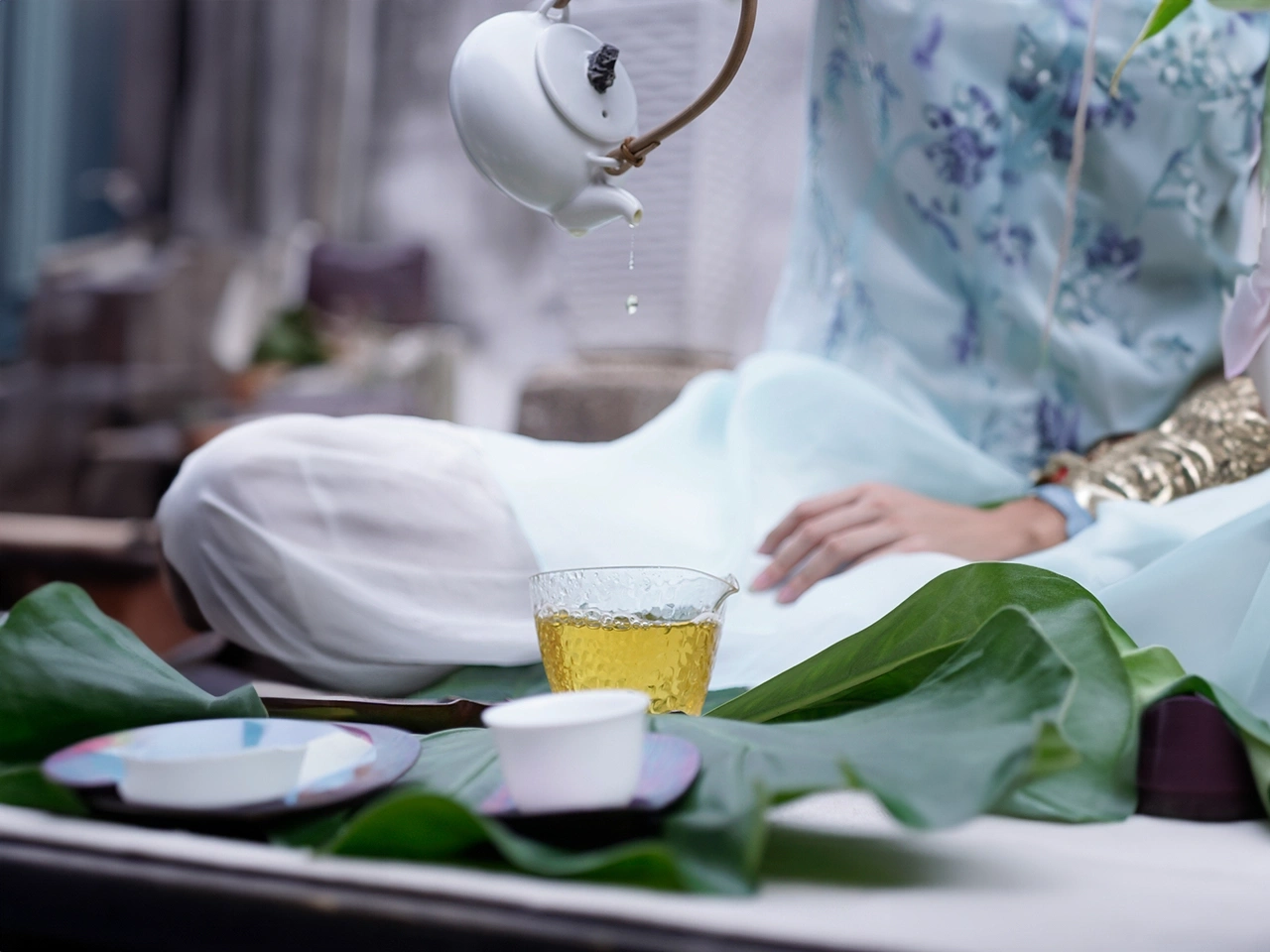
Drinking tea is a dance, an orchestrated ritual. Once it begins, the outside world is locked away, and the space opens for an encounter with the mystical.
There are two key terms in the Japanese ceremonial tea tradition. One is *chakai* (tea gathering), where several people share sweets and a bowl of delicate, light Matcha (powdered green tea leaves mixed with water and whisked into a froth—*usucha*). It is a quick affair, as there are many people to serve.
The other key moment is the chaji (tea event) which consists of a light meal, two ceremonies around the wood charcoal that heats the water, two types of tea, a dense and creamy matcha – Koicha, and the Usucha. It is held for a smaller number of people in a special house and garden.
Chakai can take 20 minutes while Chaji can last up to 4 hours. The latter emphasizes the meaning of each step, each moment is a ritual.
Zen sees beyond the stereotypes we have built, the dogmas, the socio-cultural barriers, the aspects of life created by man, that are not part of the nature of things. As we open ourselves to the path of Tea, we live more in harmony.
In Japan there is a tea celebration dedicated to the Moon. Poems (haikus) are written and read, music is listened to, tea is drunk and the mysticism of the moon is admired.
Otsukimi, seeing the moon, is especially important during autumn, when the moon is brightest.
Flowers of moon slightly white In the fading light How pure is the rising moon
Shimagi Akahiko (1876-1926)
In Morocco, green tea is usually drunk mixed with mint. A tradition that arrived in the country about 200 years ago. It is curious because neither the tea, nor the mint, nor the sugar are native to Morocco, yet the daily Mint Tea ceremony is practiced by almost all its inhabitants. It is a social ritual of connection. It is usually prepared in silver teapots and served in small glass cups.
For 1 liter
In a teapot add the Bereber Dream leaves, the sweetener if you wish, the spearmint. Heat the water until just before boiling. Pour it over the plants. Wait 3 minutes and serve in cups.
The moment for a Tea is that unique space to be ourselves, to share ideas, wisdom and love in a relaxed environment. Conversations around a cup of Tea tend to be harmonious, free, and spontaneous, with comfortable spaces of silence and contemplation.
We practice humility, respect and gratitude for tea, for our company and for ourselves.
The best Tea sessions are the simplest ones, where we allow our mind to be silent, still, calm and joyful without trying to impress; where the space leads to relaxation without needing to be or know anything – where the tea, the utensils, and the water combine gently without ostentation, and the company is as natural as the ‘inner mountains’ to which we retreat, leaving behind the ‘dusty world’ towards the deep paths of Tea.
– The Tao of Tea, Aaron Fisher
Before we sit down to drink tea, let us invoke harmony, respect, humility and simplicity, which, like good tea and water, are a magical combination to feel Tea.
Preparing a cup of tea mindfully involves being aware of the elemental dance involved in the preparation.