Today Matcha is becoming common on the menus of cafés and restaurants. It has become an everyday ritual for thousands of people around the world. And what is Matcha?
Matcha is a preparation of Green Tea originating from Japan. It is a Green Tea ground with stone mills. Let us remember that all Tea comes from the same plant, Camellia Sinensis. There are thousands of varieties of this plant and different processes to transform the plant into green tea, white tea, black tea, oolong, or post-fermented or dark teas.
The origin of Matcha is ancestral and ceremonial, directly connected with Zen Buddhism. Tea originated in China and traveled to Japan in the hands of monks during the Song dynasty (960 – 1279). Over the years it was introduced into meditation practices and the philosophical principles Wa Kei Sei Jaku (Harmony, Respect, Purity, Tranquility). The Japanese Tea ceremony was called Chanoyu.
Today in our everyday rush, the search for Matcha has sometimes been limited to seeking alternatives that help to “lose weight” or to stay active. But the benefits of Matcha encompass many aspects of our physical, mental, emotional, energetic and spiritual well-being.
Matcha is processed from fresh leaves freshly harvested that grow under shade to increase the amount of chlorophyll in the leaves, similar to another Japanese green tea, Gyokuro. The increased chlorophyll contributes with large amounts of
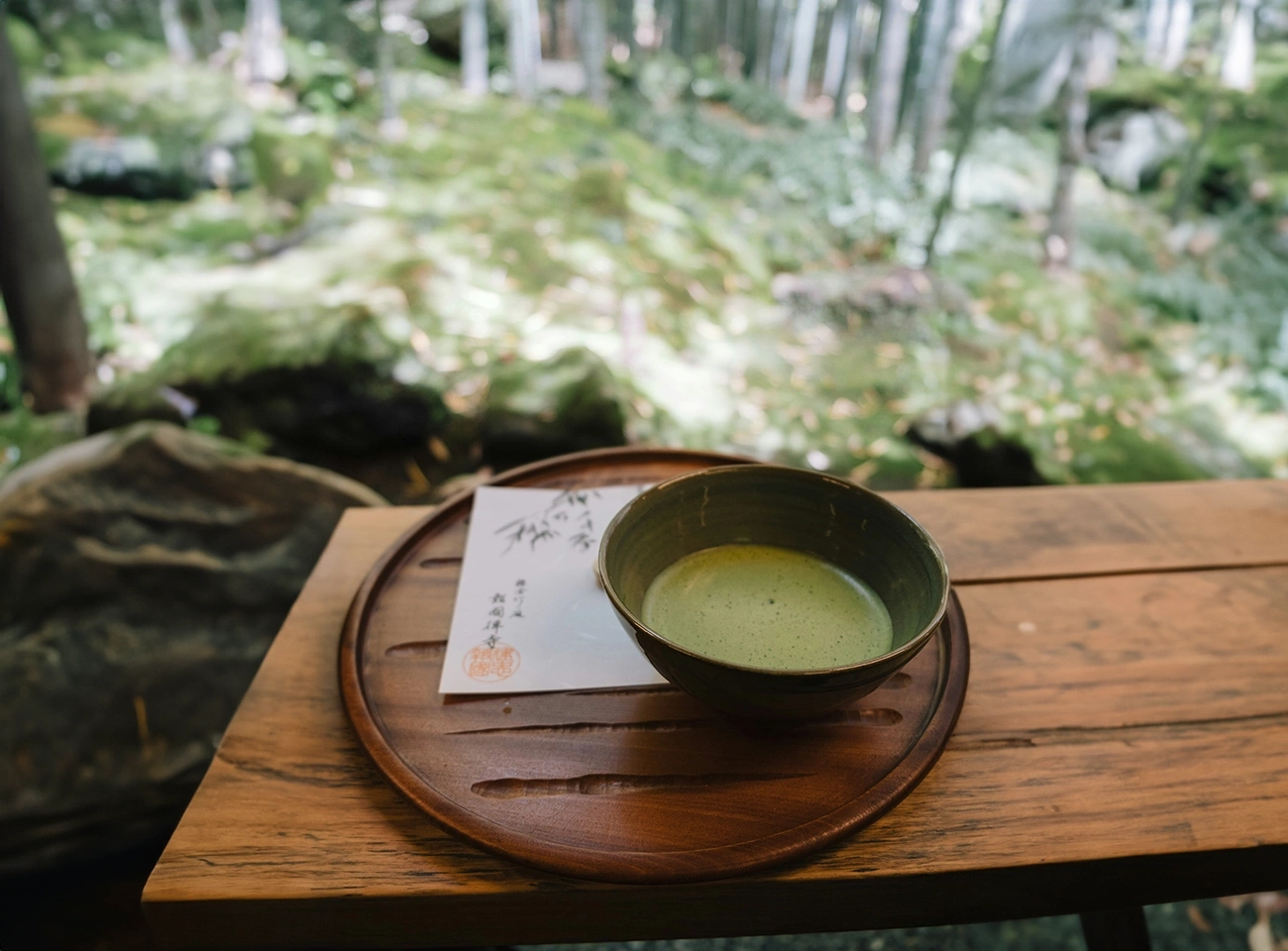
The color of Matcha is a vivid emerald green. Its flavor is slightly sweet, somewhat astringent, herbal and creamy. It is one of the few teas that are ingested completely when consumed.
To prepare a Matcha and receive all its benefits, we first look for a very good quality tea.
We also look for the necessary utensils to prepare it.
Chasen – Bamboo Whisk
Chawan – Wide ceramic bowl that allows you to whisk the tea with water
Small strainer – for sifting Matcha
Chashaku – Bamboo tea scoop
To prepare a cup of matcha you take approximately 1.5 grams of Matcha with a small spoon, you sift it over your chawan or bowl. You add 150 ml of water at 80 degrees and whisk with the chasen with soft and harmonious but quick movements in a figure 8 or W shape until you create a good layer of foam.
This ancestral form of Green Tea brings us many properties. Its high content of antioxidants, especially the presence of EGCG (epigallocatechin gallate), gives it anti-cancer characteristics. It is also an excellent cellular rejuvenator. Like all good quality green teas, it has antiviral properties, helps balance cholesterol and blood sugar levels, promotes heart health, proper immune system function, and concentration.
There are those who combine green tea with lemon or drink it on an empty stomach. We recommend that you take matcha alone so you can feel its aromas, flavors and benefits. It is better to drink it after eating as many people can find it acidic.
If we connect with its ancestral uses and knowledge, matcha can be a great ally to help us enter deep states of meditation.
Good quality matcha has few contraindications. However, it is better to avoid it when there is high sensitivity to caffeine, chronic diseases of the gallbladder, liver and kidneys, or severe allergies to green tea.