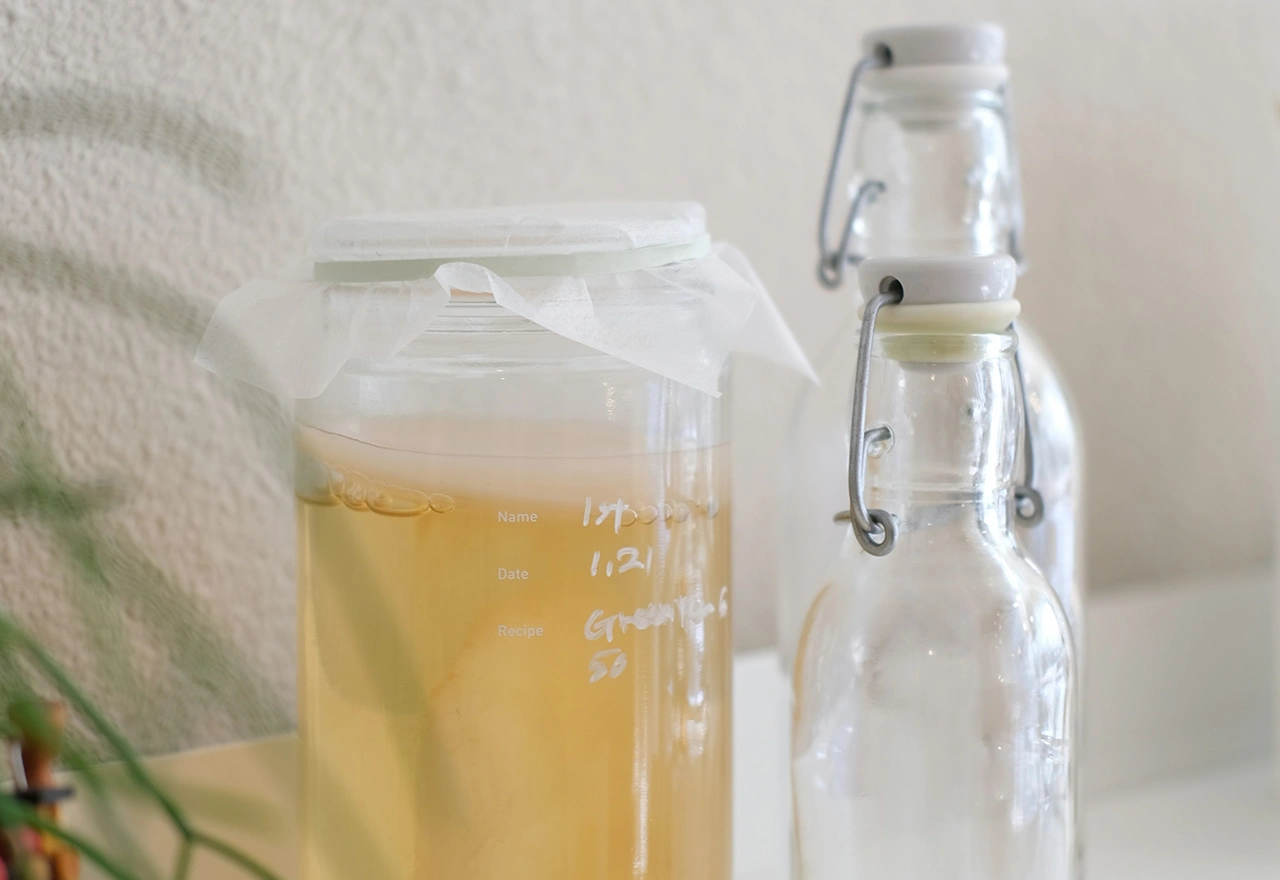
Kombucha is an ancient beverage created through the natural fermentation of green or black tea and sugar or panela, carried out by a colony of bacteria and yeasts called Scoby. During the fermentation process, the Scoby uses almost all the sugar and produces bubbles that turn kombucha into a delicious drink.
Among its main benefits are:
The flavor of kombucha can vary greatly depending on how long it ferments, from 7 to 20 days. If what we want to achieve is a milder flavor, we should let it ferment for a shorter time. To achieve a more intense and vinegary flavor, less sweet, we will let the kombucha ferment for longer. Keep in mind that temperature will play an important role in how quickly fermentation occurs. We recommend tasting it every day so you can find the fermentation level you like best.
What do you need to make kombucha at home?
Do not use any sugar substitutes, keep in mind that the scoby needs it, it is its food source. If you give it something other than sugar, you can weaken it.
In this way, you should avoid stevia, honey, agave syrup or coconut sugar.
To make kombucha you need to ferment tea, this is the process:
1st Fermentation: Usually lasts between 7 and 12 days, during this time, the sweet tea ferments, as a result, you’ll have kombucha with natural flavor and little gas.
2nd Fermentation: It’s optional, it’s used to add some flavor, you need to bottle it hermetically and leave it between 2 and 4 days at room temperature. Also, this is how you get bubbles.
First Fermentation:
This is the recipe we make, it has changed over time, based on testing, you can use other quantities or methods, the ideal thing is that you adapt it to your taste.
Whatever the quantity, you must use 1 scoby. The starter culture is kombucha with no added flavor.
| Water | Starter culture | Tea (green or black) | Panela |
| 4 liters | 200 milliliters | 40 grams | 250 grams |
Utensils
Preparation
Now it’s ready to drink, if you want to add flavor and make it more carbonated, you must do the second fermentation.
In the second part of this blog that we will publish next Saturday, June 19th, you will find this section in detail.